



Have you ever checked your blood sugar level at home and wondered, “what this really mean? Is this number actually okay?”
Wouldn’t it feel better to understand the readings instead of worrying about them? We know blood sugar readings are confusing, especially when you see different numbers at different times of the day. One reading might be taken during fasting, and another one could be taken after 20 minutes of breakfast.
And then after hours, the readings do not match at all. That’s totally exhausting, isn’t it?
But the truth is, that’s exactly when the difference between fasting and post-meal blood sugar level becomes important to understand. Now you must be thinking, why is it even necessary to check the blood sugar level at certain times?
Your blood sugar level offers a glimpse into your body’s metabolic efficiency and all health-related concerns. When you understand the difference between fasting and post-meal blood sugar levels, you can easily identify the early signs of insulin resistance.
If you are still confused, let us break it down in plain language – without any medical jargon. Read this blog post till the end to understand it better.
In simple terms, blood sugar is actually the amount of sugar present in your bloodstream. It’s your body’s main source of energy, which is influenced by food, activity, hormones, stress, etc.
Our body uses insulin to move sugar from the blood into the cells. When this system works efficiently, blood sugar stays in a healthy range.
And when it doesn’t, your blood sugar level eventually rises and silently, leading to diabetes.

Another important concern that arises in most people’s minds is, why should we measure blood sugar levels at different times of the day?
Well, the reason is that blood sugar is not a fixed number. It changes throughout the day depending on:
That’s the reason doctors look at two basic measurements. Fasting blood sugar and post-meal.
Fasting blood sugar level is measured after 8-12 hours of not eating. It should be the first thing in the morning, before even breakfast, coffee, or tea.
Fasting blood sugar tells you three basic things:
Here are some key figures about fasting blood sugar normal range, diabetes, and pre-diabetes range.
| Blood sugar test | Normal range | Prediabetes | Diabetes |
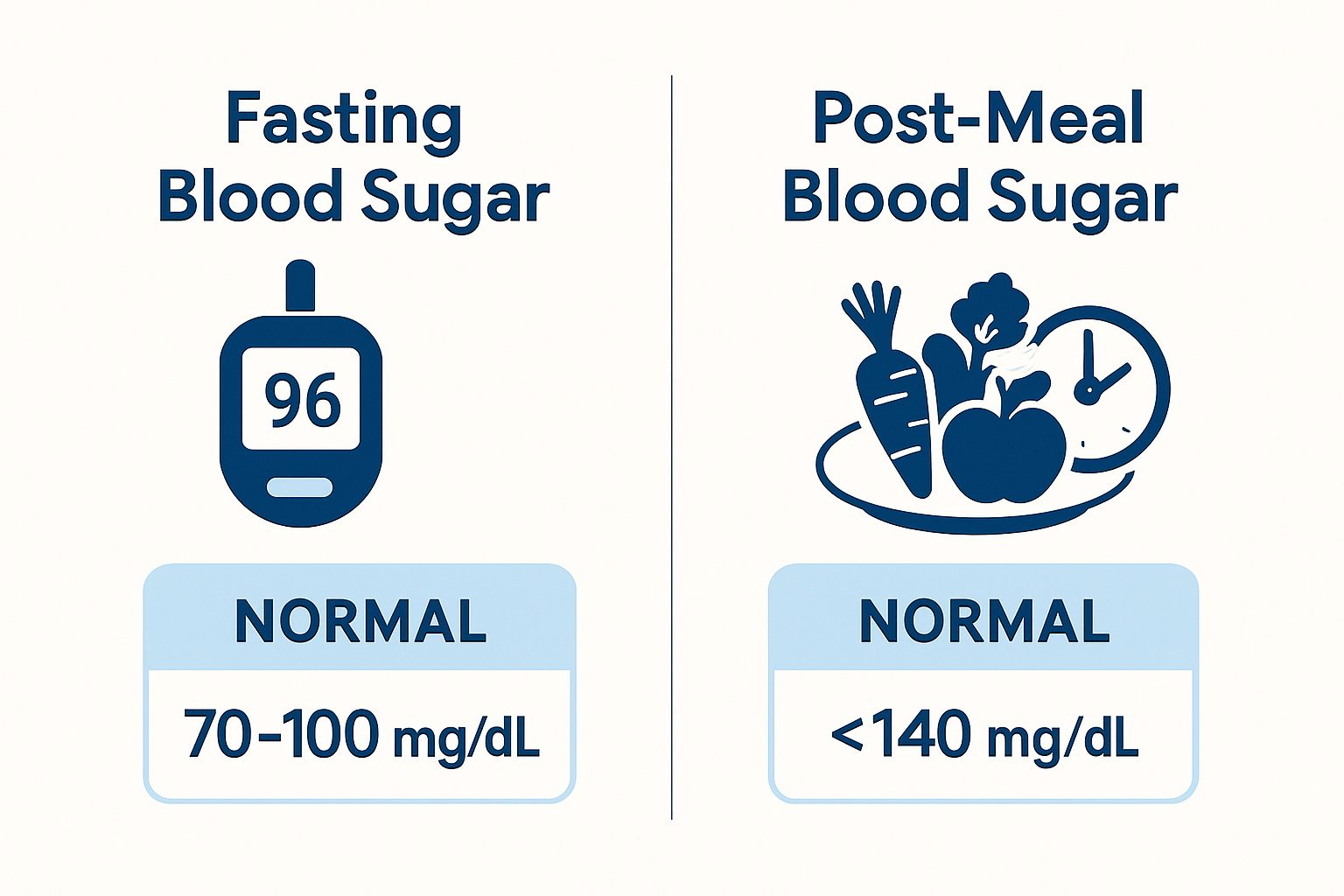
| Fasting blood sugar | 70 – 99 mg/dL | 100 – 125 mg/dL | 126 mg/dL or higher |
| Post-meal blood sugar | Less than 140 mg/dL | 140 – 199 mg/dL | 200 mg/dL or higher |
Now, let us summarize so you can understand better.
A normal fasting blood sugar level means your insulin is working well and your body maintains stable blood sugar overnight.
The prediabetes range means your blood sugar is higher than normal, and insulin resistance may be developing. This also means that you are at high risk of developing type 2 diabetes.
The diabetes sugar range means your blood sugar is consistently elevated, and your body is not using insulin efficiently. In that case, medical consultation is always recommended.

Post-meal blood sugar is measured 1-2 hours after eating and commonly checked at the 2-hour mark. Make sure you check it after a regular meal and not a special or skipped one.
Post-meal blood sugar shows:
Here are the typical 2 hour post prandial sugar ranges:
Normal post-meal blood sugar range = Less than 140 mg/dL
What does this mean?
Prediabetes range = 140 to 199 mg/dL
This means
Diabetes range = 200 mg/dL or higher
This means
Here are some key high blood sugar symptoms:
Blood glucose ranges are affected by many common factors, such as:
Well, it depends on multiple factors. For example, you are at high risk of diabetes if you:
If you have prediabetes, then regular monitoring helps you. Always observe how food choices affect you, track improvements from lifestyle changes, and catch rising trends early.
And if you have diabetes, then monitoring is important for medication adjustments, preventing complications, and maintaining daily control.
Waiting for annual lab tests is not enough for many people. Home monitoring helps in:
Not all blood sugar monitors are the same. Make sure you are using a good glucometer, which is:
Blood Glucometer ACCU CHECK Active is the best choice that consists of lots of powerful features. It has just two buttons to operate for intuitive handling. Its safety features include underdosing alerts, a re-dose option in 10 seconds, and test strip expiration warnings.
Blood Glucometer ACCU CHECK Instant is another option that has an intuitive target range indicator, giving you a great visual reassurance. It can be individualized to suit your personal therapy goals. Plus, it has a sleek, modern design with large, easy-to-read BG numbers and a bright, backlit display.
Understanding your fasting and post-meal blood sugar readings is one of the simplest ways to stay informed about your health and maintain normal blood sugar levels over time.
These numbers help you recognize early changes, adjust daily habits, and prevent long-term complications before they begin. Consistent monitoring with accurate devices makes it easier to stay within healthy ranges and take control with confidence.
For dependable glucometers and trusted medical essentials that support maintaining normal blood sugar levels, Surgicals.pk provides reliable solutions for safe and convenient at-home monitoring.