

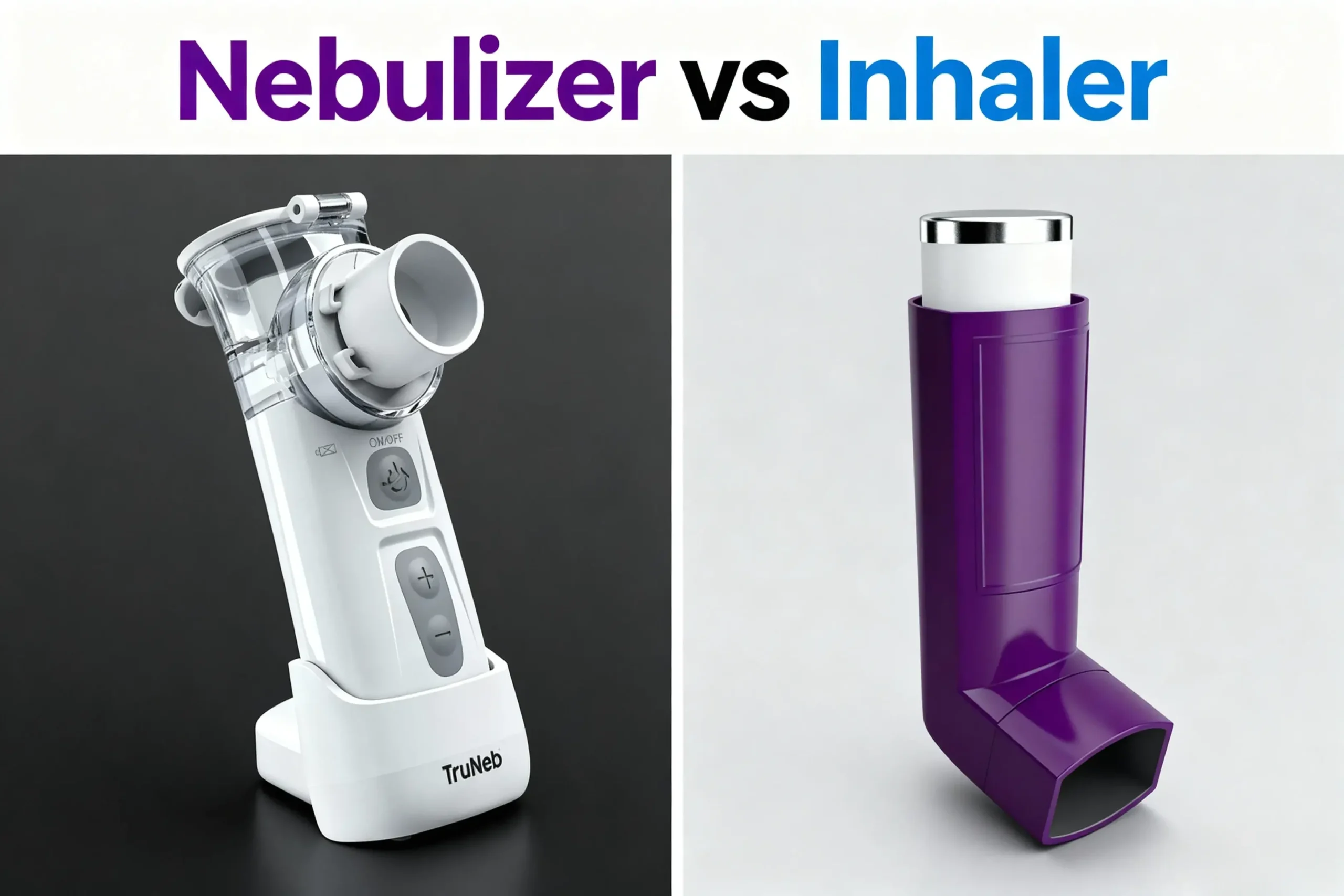


Have you ever wondered why some people use a nebulizer, while others believe an inhaler is a more effective device for breathing difficulties? What is the difference between them? And which one is the right to use?
You may have a lot of questions in your mind regarding nebulizers and inhalers, especially if someone in your family is dealing with breathing issues like asthma or chest congestion. You must have seen them using a nebulizer or inhaler.
But do you really know what the purpose, importance, and functionality of each device are? What types of allergies or issues can be relieved with these devices?
Well, don’t worry. Today, we are going to discuss the respiratory devices, when, which, and how to use them for quick relief. So, stay tuned and let’s get to the bottom of it.
Before we dive deep into details, it’s important to understand what’s common in between a nebulizer and an inhaler.
There are lots of similar features in both inhalers and nebulizers. They deliver medicine directly to the lungs, commonly used for breathing difficulties, and work faster than tablets or syrups.
Above all, they help open airways and reduce breathing difficulties within minutes.
Every age group can consider using these devices, including children and elderly people. The real difference between them lies in how they deliver the medicine and when they are used.
Now, let’s understand the basic difference between an inhaler and a nebulizer.
In a nutshell, an inhaler is a fast and portable device that offers relief in seconds. A nebulizer is a comparatively slow but more thorough device that gives long-term relief.
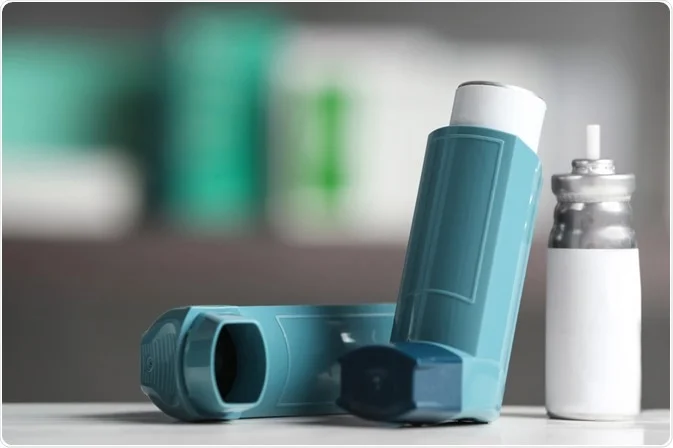
Let’s talk about inhalers in detail to understand their functionality better.
If you have ever come across an inhaler guide in the past, you must have read that this is a small handheld device that releases medicine directly into your lungs through a puff.
There are two types of inhalers:
Inhalers are popular because they are quite small and easy to carry. You can keep them in your purse while traveling or going to the gym. Plus, they offer fast relief even better than tablets. They are also very easy to use once learned properly.
Other than that, inhalers are best for emergencies and considered the first line of treatment for many people.
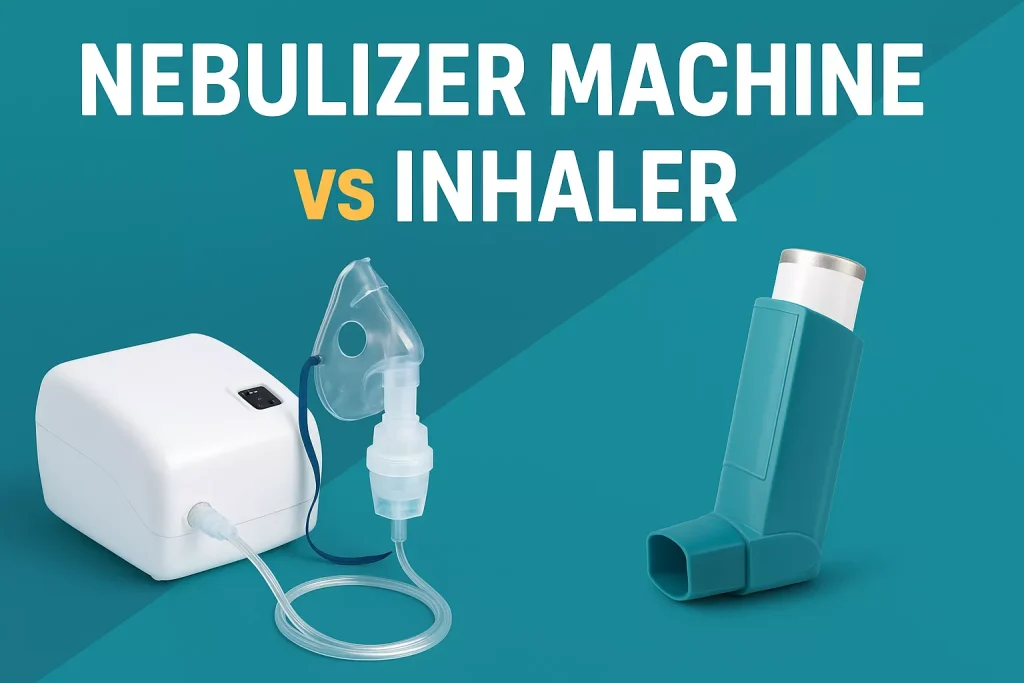
A nebulizer is another useful device that changes liquid medicine into a mist that you breathe in through a mask. A nebulizer machine includes a compressor or machine, tubing, a medicine cup, and a mask or mouthpiece.
Nebulizers are considered an ideal device because they are easy to use for children and elderly people. There is no timing or coordination required, and they deliver medicine slowly and deeply.
Moreover, a nebulizer can be used during severe breathing trouble. So, if you are your family member has breathing problems, it is a must to have a reliable nebulizer machine at home.
The next question is, when do doctors recommend an inhaler.
Doctor suggest inhaler when:
Doctors recommend a nebulizer when:
Features |
Inhaler |
Nebulizer |
| Medicine delivery | Quick puffs | Slow mist |
| Speed | Very fast | Takes more time |
| Ease of use | Needs coordination | Easy, normal breathing |
| Best for | Mild symptoms, quick relief | Severe breathing issues |
| Portability | Highly portable | Mostly home use |
| Cleaning | Minimal | Regular cleaning required |
Both devices are best in their own terms and usage. It depends on what your doctors recommend and how severe your symptoms are.
An inhaler is a most useful and go-to device for many people, as it gives fast relief during sudden symptoms. It is small and portable and works well for both quick rescue and daily control of medicines.
It’s best for
A nebulizer is best for people who struggle with inhaler technique. People with severe asthma attacks should consider using it for relief. And it is preferred for children and the elderly as well.
Using special nebulizers for treating asthma plays a key role in getting quick relief. For example, the Beurer IH 18 Nebulizer is one of the specific devices designed for asthma patients and people with cold allergies. It helps treat the upper and lower airways and multiple respiratory diseases.
Many people also trust the Believia Compressor Nebulizer as it has a concise and fluent design and features one-button operation for easy use.
Best for
Some common mistakes to avoid while using an inhaler and a nebulizer.
Follow these simple steps for using an inhaler
Make sure you don’t rush or inhale too fast. Use a spacer if recommended.
Follow these simple steps for using
Stay relaxed while using a nebulizer and do not rush the process. Also, complete the full session.
Cleaning your nebulizer machine is not an optional thing but highly essential.
Wash the medicine cup and mask with warm water and let them air dry completely after every use.
For regular cleaning, you can use mild soap and warm water. Rinse it thoroughly and then air dry on a clean towel.
Always remember, a dirty nebulizer can reduce effectiveness and cause infections.
For easy cleaning & maintenance, you can buy a mini nebulizer that is easy to carry and quite lightweight. It is ideal for all ages.
Breathing support devices play an important role in managing everyday respiratory comfort and sudden breathing difficulties. Choosing the right device often depends on the situation, the severity of symptoms, and how easily the device can be used correctly.
While inhalers are valued for their speed and convenience, nebulizers are often preferred when slow, steady medication delivery is needed. Understanding how each device works and when to use them helps people make more confident and informed decisions about their respiratory care.
For those looking to explore reliable home-use options, trusted medical stores like surgicals.pk provide a range of quality nebulizers and related devices designed to support safe and effective breathing management.